top of page


Ending the War Against Iran and the Cycle of Resorting to Military Action
The war in Iran is widely unpopular, but individuals, congregations, and organizations committed to social justice can do more to voice their opposition by acting collectively and proposing alternatives to solving international differences by military force. Although national faith leaders and many denominations have raised moral issues to oppose this war, many local congregations In Western North Carolina have been reluctant to oppose the war in Iran. An exception is Trinity
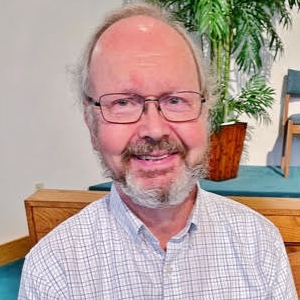
Bob Miles
Jun 86 min read


Tidings Newsletter - June 2026
Pastor's Corner I can’t recall another confession that uses the word love so many times... Special thanks to Dwight C. for bringing to our attention the new confession of faith being proposed at this year’s General Assembly. I was not aware until Dwight mentioned it that a new confession was even in the works. You can read the draft of the confession for yourself at https://www.pc-biz.org/search/3001517 . Like Dwight, I, too, would like to comment on parts of the confessi

Trinity Presbyterian
Jun 211 min read


A New Confession of Faith Addressing Modern Challenges
On the Proposed New Confession for the Presbyterian Church (U.S.A.) by Dwight Christenbury My sermon of May 17, 2026, dealt with a proposed new addition to The Book of Confessions, part of the constitution of the Presbyterian Church (U.S.A.). A draft of this statement, meant to be “a new confession of faith addressing modern challenges,” is on the docket for consideration by the 227th General Assembly of the PC(USA), which will convene late next month in Milwaukee. The proces

Dwight Christenbury
May 181 min read


Tidings Newsletter - May 2026
Pastor's Corner Let me introduce to you our new summer student marketing intern Last year during our mission study, we as a church came to the conclusion that we love our church just the way it is, but we need to do a better job of promoting, publicizing and marketing the church and its activities to people likely to partner with us in our mission activities, and that it would be ideal if we could hire a student marketing intern to help us with that. Well, we found one! Let m
Trinity Presbyterian
May 714 min read


Tidings Newsletter - April 2026
Pastor's Corner Crucifixion and Resurrection as Metaphors of the Spiritual Journey During April of this year we reach the holy high days of our Christian faith, Easter weekend, when we remember the crucifixion of Jesus and celebrate his resurrection. Death and resurrection are two powerful metaphors of the Christian faith journey. They describe perfectly our common human spiritual experience. Death followed by new life. Darkness followed by Light. Desert experience follow
Trinity Presbyterian
Apr 312 min read


Waiting...
This is surely a time of waiting - for Easter, for peace, for sanity. Twenty women gathered at Montreat Conference Center last weekend for a retreat led by Caroline Dennis , pastor of Westminster Presbyterian Church in Greenwood, SC. Caroline is the pastor of Flora and Rick Hobson’s former church, and she was a perfect choice. When we arrived, she had posted large sheets of flip chart paper on the walls and provided us with sticky notes and lots of markers. She was alre

Norie Sanchez
Mar 232 min read


Tidings Newsletter - March 2026
Pastor's Corner Updates! For my newsletter article in March I decided to catch you up on various things happening at Trinity right now: PNC –Our Pastor Nominating Committee is actively working to bring the next pastor to Trinity. The form that advertises the position on the national denominational matching website has been posted. You can view it by going to https://clc.pcusa.org/login and entering “North Carolina” into the state box. The form is right now the first one appe
Trinity Presbyterian
Mar 513 min read


Tidings Newsletter - February 2026
Pastor's Corner Reflections on My First Year As Transitional Pastor of Trinity I started my work as a transitional pastor at Trinity on February 16, 2025, and so I am coming up on my first year anniversary in that role . I thought I would use my space in our monthly newsletter to reflect on my first year with you. It has been such a delight for me over this past year to get to know you better as a congregation and as individuals. What a great group of people gather at Trinity
Trinity Presbyterian
Feb 1013 min read


Tidings Newsletter - January 2026
Pastor's Corner Happy New Year! For Trinity, the start of the new year is a good time to review the mission of our church, which has been summarized in our 2025 Mission Study: Trinity will continue to offer weekly worship, as well as other activities which help nurture the Christian faith of its members, regular attenders and visitors. Trinity will continue to provide thoughtful learning and study opportunities through classes, groups, book studies, library, retreats and spec
Trinity Presbyterian
Jan 711 min read


2026 Women’s Retreat at Montreat
WILL YOU WAIT WITH ME? Will you join us during Lent for a weekend of renewal, rest, laughter, learning, sharing and the Spirit? The 2026 Women’s Retreat at Montreat promises all of those experiences and more! This March 13-15th , our Trinity Women’s Retreat will once again present a unique experience, and we’ll be led by Caroline Dennis, Pastor of Westminster Presbyterian Church in Greenwood, South Carolina . Caroline is an enthusiastic leader, friend of Flora’s, and ver
Norie Sanchez
Dec 31, 20252 min read


Tidings Newsletter - December 2025
Transitional Pastor's Note "…waiting, anticipating, expectant people of faith.” On the church calendar in December of each year is the church season of Advent. Advent comes from the Latin word “advenire” , meaning “to come” or “the coming.” For the Church, then, Advent is the time of year we focus on the coming of Christ into the world–past, present and future. At Advent we remember Jesus coming into the world in the past the first time over 2,000 years ago in Bethlehem as
Trinity Presbyterian
Dec 1, 202512 min read


Trinity Presbyterian Church celebrates 60 Years in Hendersonville!
Stewardship Dedication & Anniversary Reception this Sunday, Nov 9, 2025 ABOVE: Trinity worships in the 1960s | one of our early church homes at 1403 5th Ave. W, Hendersonville | the planning team for our "new" (and current) sanctuary at 900 Blythe St. | Rev. Hugh Eichelberger, our organizing pastor Monday, November 3, 2025—This Sunday will be a BIG DAY for Trinity Presbyterian Church (PCUSA) of Hendersonville . Celebrating 60 years, the congregation on Sunday Nov. 9 will have
Trinity Presbyterian
Nov 6, 20253 min read


Eco-friendly Celebrations and Traditions in a Season of Giving
(courtesy of our friends at "Presbyterians for Earth Care" We are a consumer-driven society and oftentimes, in our attempts to celebrate...
Trinity Presbyterian
Sep 30, 20252 min read


Standing with our immigrant sister and brothers
“…what does the Lord require of you but to do justice, love kindness and walk humbly with your God”—Micah 6:8 The Session of Trinity...
Trinity Presbyterian
Sep 24, 20252 min read


Reflections on Iona
Participants in Trinity's pilgrimage to Scotland’s Iona Abbey (June 28 to July 4, 2025) gather to share reflections, stories, and...
Trinity Presbyterian
Aug 5, 20251 min read


CirclesUSA Model for Eradicating Poverty
CirclesUSA Model for Eradicating Poverty Considered for Henderson County, NC The Presbyterian Church (USA) has started a movement...

Paul Hugger
Jul 7, 20253 min read


Do something! Ideas to help you through tough times
"When you're weary, feeling small. When tears are in your eyes, I will dry them all. I'm on your side...oh when darkness comes and pain...
Barb T.
May 22, 20252 min read


Why Bother?? Women’s Retreat Registration Deadline is Jan. 26
The deadline to register is looming – this Sunday, Jan. 26. But why would I consider attending the Trinity Women’s Retreat at Montreat...
Trinity Presbyterian
Jan 22, 20253 min read


We all know someone...
My best friend in high school was a brilliant musician. I was the science nerd, but he could play any instrument you put into his hands....

Katie Cilluffo
Aug 19, 20245 min read


Reading Between the Lines...
Trinity Presbyterian Church is a vibrant community. In addition to the many spiritual and worship activities, Trinity is also a host to...

Cindy Ann Bowers
Jul 24, 20242 min read
bottom of page